

Why Your Body Isn't Healing: Understanding the Righting Reflex, the ONE Technique & the Integrated Urinalysis Panel
Have you ever wondered why some people seem to recover quickly while others continue to struggle with recurring pain, fatigue, digestive problems, or simply never feel like themselves again?
Many patients come to Blue Waters Health Center after hearing the same thing repeatedly:
- "Your lab work looks normal."
- "Nothing serious shows up on your imaging."
- "You'll just have to learn to live with it."
Yet they still know something isn't right.
At Blue Waters Health Center, we believe those symptoms deserve a closer look. Instead of asking only, "Where does it hurt?" we ask a different question:
Is your body adapting to stress the way it was designed to?
That question leads us to one of the body's most remarkable abilities—the righting reflex.
The Righting Reflex: Your Body's Built-In Ability to Adapt
Your body is constantly working to maintain balance. Every second of every day, it is adjusting to physical, chemical, and emotional stress while repairing tissues, regulating hormones, coordinating movement, supporting digestion, and maintaining countless other functions.
This remarkable self-regulating ability is often referred to as the righting reflex.
The righting reflex is your body's natural capacity to:
- Maintain balance (homeostasis)
- Adapt to physical and emotional stress
- Coordinate healing and repair
- Restore efficient communication between body systems
You don't consciously control this process. Your body is doing it continuously.
The question isn't whether your body wants to heal.
The question is whether something is interfering with its ability to adapt.
Why Symptoms Keep Returning
When the body can no longer adapt efficiently, it begins to compensate.
Compensation can work for a while—but eventually the body starts sending signals that something needs attention.
Those signals may include:
- Chronic muscle tension
- Recurring neck or back discomfort
- Digestive concerns
- Fatigue
- Brain fog
- Poor sleep
- Frequent headaches
- Feeling "off" despite normal medical testing
Symptoms are important because they tell us something is happening. However, they don't always tell us why it's happening.
That is why looking beyond the symptom itself can provide valuable insight.
"The body often reflects what the mind and emotions have been carrying. Lasting wellness begins when we address the whole person—not just the symptoms."
— Dr. Mike Patten
The Nervous System Coordinates Everything
The nervous system serves as the body's communication network.
It helps coordinate movement, digestion, circulation, hormone balance, immune responses, and countless automatic processes that keep you functioning every day.
When communication flows efficiently, your body can adapt to life's stresses more effectively.
When communication becomes less efficient, your body may begin compensating instead of adapting.
Stress affecting the nervous system can come from many sources, including:
- Physical stress such as injuries, repetitive movements, or poor posture
- Chemical stress related to nutrition, hydration, or environmental exposures
- Emotional stress that places continual demands on the body's adaptive systems
Over time, these stresses may influence how efficiently the body responds.
Why We Don't Chase Symptoms
Two people can experience the exact same symptom while having very different patterns of stress within the body.
For example, two patients may both complain of persistent fatigue.
One person's fatigue may relate primarily to digestive function.
Another may be experiencing nervous system overload.
Someone else may simply not be recovering well from ongoing physical stress.
Although the symptom sounds identical, the underlying pattern can be very different.
That is why our goal is not simply to focus on where symptoms appear, but to better understand how the body is functioning as a whole.
The ONE Technique: Supporting Better Nervous System Communication
The ONE Technique asks one fundamental question:
Where is the nervous system having difficulty adapting?
Rather than simply focusing on painful areas, this chiropractic approach evaluates patterns of nervous system function to determine where precise spinal adjustments may help restore more efficient communication.
When nervous system communication improves, many patients report positive changes such as:
- Easier movement
- Reduced muscular tension
- Improved energy
- Greater mental clarity
- A greater overall sense of balance
While every individual responds differently, chiropractic care is intended to support the body's natural ability to function and adapt more efficiently.
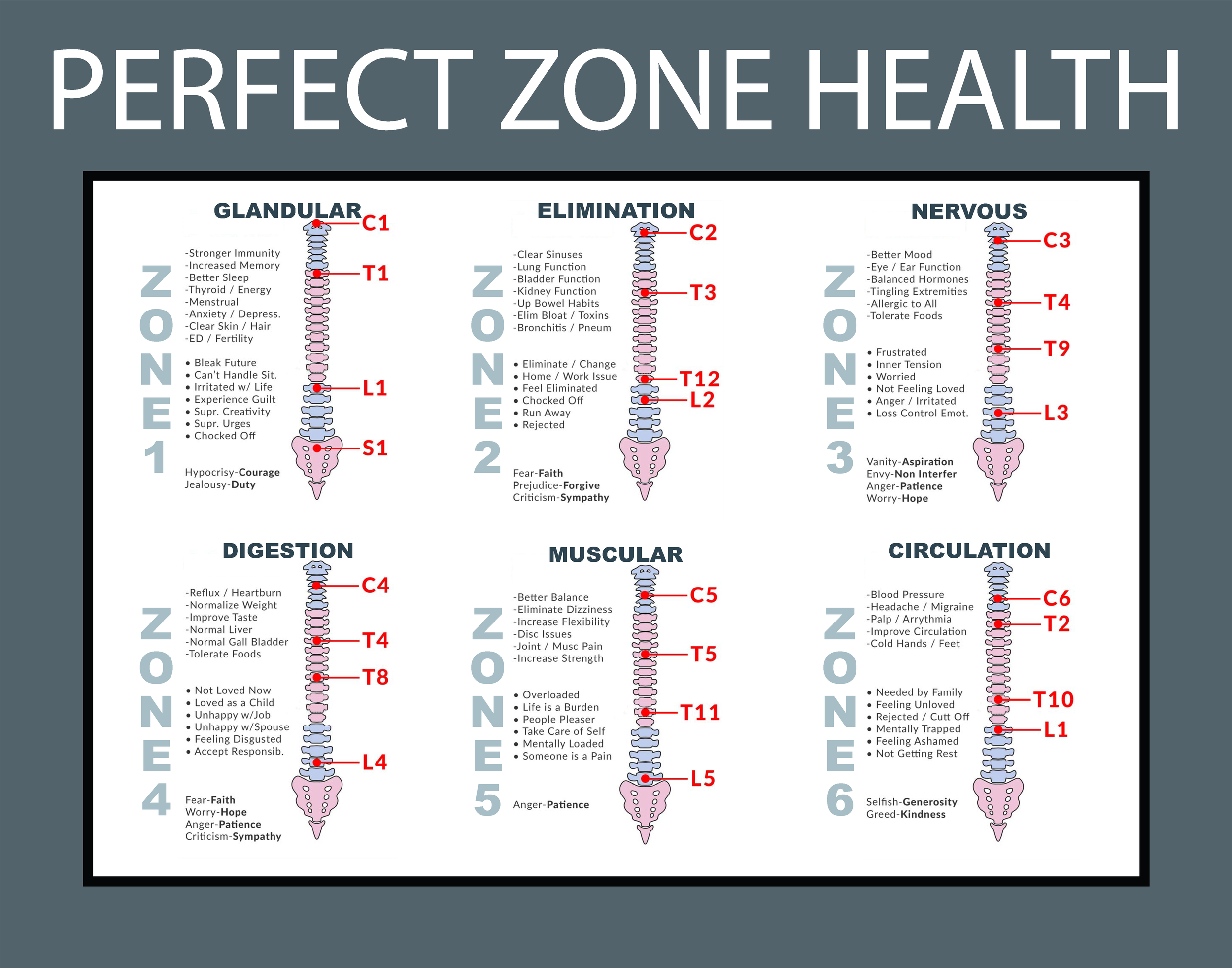
Understanding the Six Zones
The Six Zones provide a practical framework for understanding how different body systems may be responding to stress.
Zone 1 – Glandular System
Supports hormone balance, metabolism, and energy regulation.
Zone 2 – Elimination System
Supports detoxification pathways and waste elimination.
Zone 3 – Nervous System
Coordinates brain function, stress responses, and communication throughout the body.
Zone 4 – Digestive System
Supports digestion, nutrient absorption, and gastrointestinal function.
Zone 5 – Muscular System
Coordinates movement, stability, posture, and muscle tone.
Zone 6 – Circulatory System
Supports healthy blood flow and oxygen delivery throughout the body.
The Six Zones help us organize patterns of function rather than simply focusing on isolated symptoms.
Looking Beyond Symptoms with the Integrated Urinalysis Panel (IUP)
Understanding how the body is functioning often requires more than simply discussing symptoms.
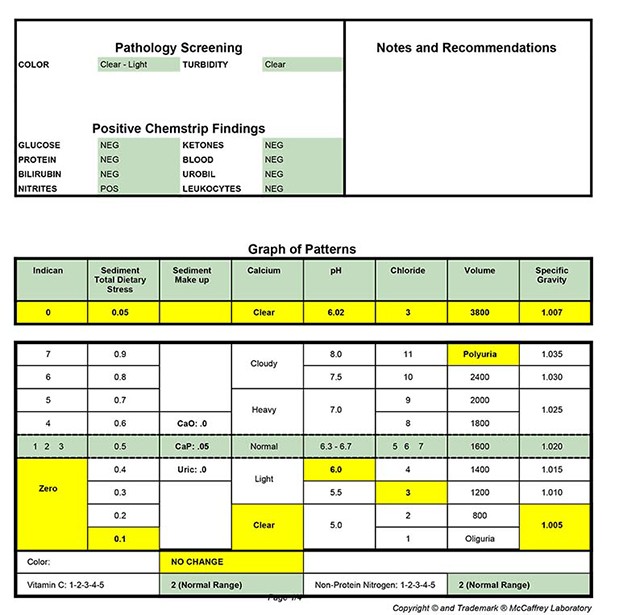
The Integrated Urinalysis Panel (IUP) is one of the assessment tools we may use to gain additional insight into patterns of physiological function as part of a comprehensive chiropractic evaluation.
Depending on the individual, the IUP may provide information related to:
- Protein digestion (Indican)
- Metabolic patterns (Sediment)
- Nervous system balance (pH)
- Electrolyte status (Chlorides)
- Hydration and fluid regulation (Volume)
- Kidney concentrating ability (Specific Gravity)
Rather than diagnosing disease, this information helps us better understand how the body may be responding to stress and adapting over time.
Connecting the IUP to the Six Zones
Patterns observed through the IUP may provide additional context when viewed alongside the Six Zones.
For example:
Digestive Function (Zone 4)
Certain findings may suggest that digestion or nutrient utilization deserves additional attention.
Nervous System Balance (Zone 3)
Changes in pH patterns may provide insight into how the body is responding to stress.
Circulatory Function (Zone 6)
Hydration patterns and specific gravity can offer additional information about fluid balance.
Glandular or Elimination Patterns (Zones 1 & 2)
Electrolyte findings may help identify areas where additional evaluation is appropriate.
When combined with a thorough history and examination, these observations help create a more complete picture of how the body is functioning.
Our Process
Every patient is unique, but our evaluation generally follows four simple steps:
- Listen carefully to your health concerns and goals.
- Evaluate patterns of nervous system function.
- Review supportive assessment findings, including the IUP when appropriate.
- Develop an individualized chiropractic care plan using the ONE Technique.
This process helps move beyond guessing and toward understanding how your body is responding to stress.
What Patients Often Notice
As nervous system communication improves, many patients report positive changes such as:
- Greater ease of movement
- Less muscle tension
- Better energy
- Improved focus
- Enhanced overall well-being
Individual results vary, but these improvements reflect the body's remarkable ability to adapt when functioning more efficiently.
Your Body Was Designed to Adapt
The human body possesses an extraordinary capacity to heal, regulate, and adapt.
Sometimes it simply needs fewer obstacles interfering with those natural processes.
At Blue Waters Health Center, we combine the ONE Technique, the Six Zones, and the Integrated Urinalysis Panel to better understand how your nervous system is functioning and to develop individualized chiropractic care focused on supporting your body's natural adaptive abilities.
If you've been searching for answers because you know something still doesn't feel right, we'd be honored to help you explore whether improving nervous system function may be an important next step in your health journey.
Schedule an appointment with Blue Waters Health Center to learn more about our whole-person approach to chiropractic care.
Dr. Mike Patton
"Your body is constantly trying to heal. Our goal isn't to force healing—it's to identify what's interfering with your body's ability to adapt."
Dr. Mike goes into detail on his YouTube Channel. Hear it from the doctor himself! (It's fun, too.)
Frequently Asked Questions
What is the righting reflex?
The righting reflex is the body's natural ability to maintain balance, adapt to stress, and support normal healing and recovery processes.
Can the body heal itself?
The body has remarkable self-healing and self-regulating abilities. Chiropractic care is designed to support healthy nervous system function, which plays an important role in those natural processes.
What is the ONE Technique?
The ONE Technique is a chiropractic approach that focuses on identifying areas where nervous system communication may be less efficient and applying precise spinal adjustments to support healthy function.
What are the Six Zones?
The Six Zones organize major body systems into six functional categories to help identify patterns of stress and guide individualized chiropractic care.
What is the Integrated Urinalysis Panel (IUP)?
The IUP is a functional assessment tool that may provide additional information about digestion, hydration, metabolism, electrolyte balance, and other physiological patterns.
Is the IUP used to diagnose disease?
No. The IUP is used as part of a broader chiropractic evaluation to better understand functional patterns within the body. It is not intended to diagnose medical conditions.
Why do symptoms sometimes keep returning?
Recurring symptoms may indicate that the body is compensating for underlying stress rather than adapting efficiently. A comprehensive evaluation can help identify contributing factors.
What conditions do chiropractors evaluate?
Chiropractors commonly evaluate concerns involving the spine, joints, posture, movement, nervous system function, and overall musculoskeletal health while considering how these systems work together.
How long does it take to notice changes?
Every individual is different. Some patients notice changes quickly, while others experience more gradual improvements depending on their health history, goals, and response to care.
How do I know if this approach is right for me?
The best way to determine whether our approach is appropriate is to schedule a consultation so we can better understand your concerns and discuss your health goals.
Schedule a Consultation
If you are struggling with recurring pain, chronic tension, or symptoms that continue returning despite treatment, the team at Blue Waters Health Center may be able to help you identify the underlying causes contributing to your condition.
Learn more at Blue Waters Health Center.