
Why Your Sciatica Isn’t Really About Your Leg (And Why It Keeps Coming Back)
If you’ve ever dealt with sciatica, you already know how disruptive it can be.
The pain shoots down your leg. Sometimes it burns. Sometimes it aches. Sometimes it feels electric. Sometimes it comes and goes for no clear reason.
You might feel it in your low back, in your hip, down the back of your thigh, into your calf, or even into your foot.
And eventually, almost everyone with sciatica asks the same question:
“Why does my leg hurt when the problem feels like it’s somewhere else?”
At Blue Waters Health Center here in Sarasota, sciatica is one of the most common — and most misunderstood — patterns we see.
Because sciatica is rarely a leg problem. It’s a nervous system pattern expressing itself through the leg.
What Sciatica Actually Is (And What It Isn’t)
Sciatica is not a diagnosis — it’s a description.
It simply means pain, tingling, numbness, or burning that follows the sciatic nerve pathway.
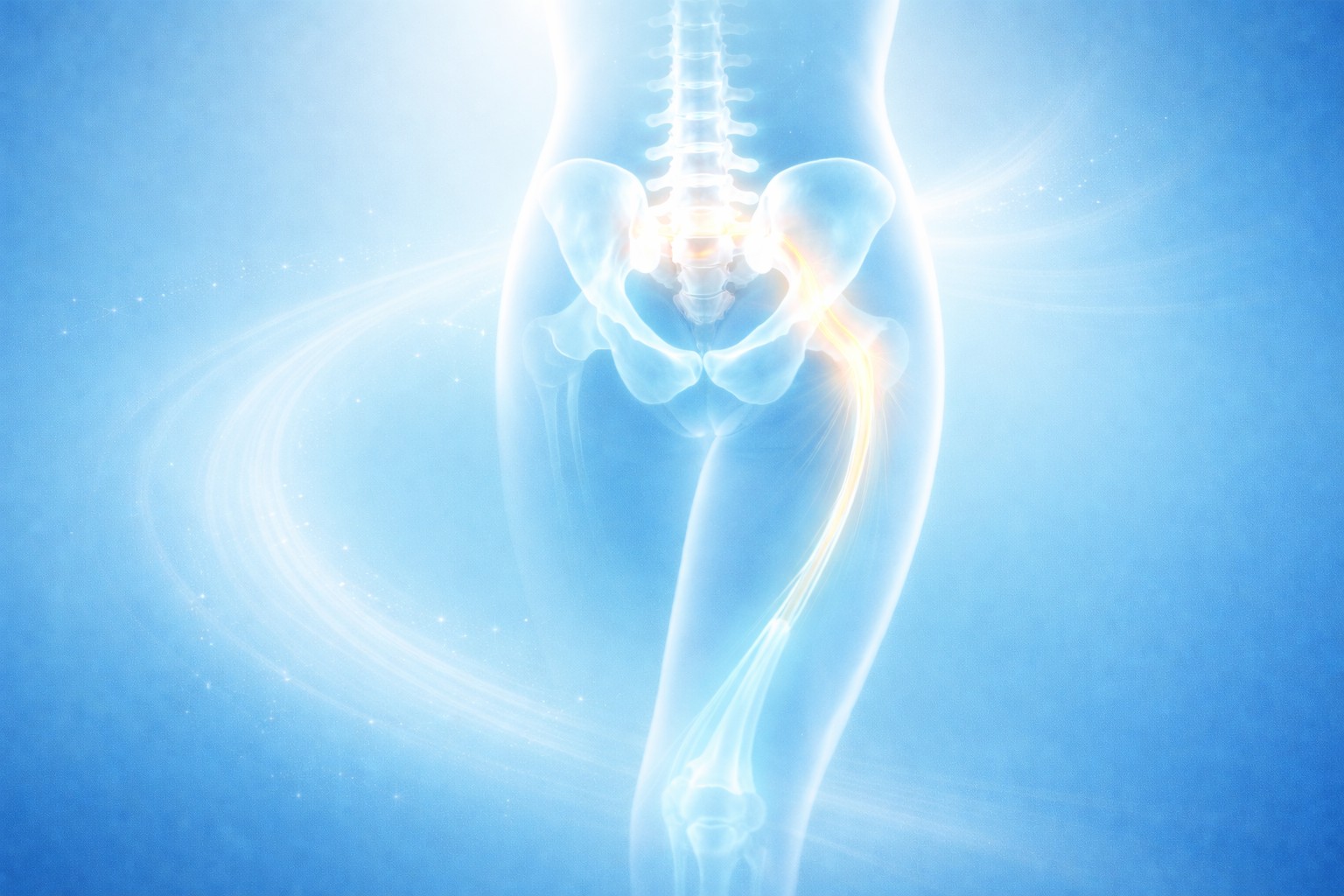
That nerve runs from the low back, through the pelvis, down the leg, and into the foot.
But here’s the key point:
The sciatic nerve doesn’t originate in the leg. It originates in the spine.
Which means treating the leg alone rarely solves the problem.
Why Sciatica Often Comes and Goes
One of the most confusing aspects of sciatica is how unpredictable it can feel.
Some days it’s intense. Some days it’s barely noticeable. Some days it disappears entirely. Then suddenly… it’s back.
This happens because sciatica is often mechanical and neurological, not constant damage.
The nervous system responds to movement, posture, stress, inflammation, and load. When conditions change, symptoms change.
That doesn’t mean the issue is gone — it means the pattern is adapting.
Why Stretching the Leg Sometimes Helps… and Sometimes Makes It Worse
Many people are told to stretch their hamstrings, glutes, or piriformis for sciatica.
Sometimes that helps. Sometimes it flares everything up.
Why? Because muscles often tighten to protect a nerve, not because they’re “short.”
If the nervous system senses instability in the spine or pelvis, it tightens surrounding muscles to limit motion. Stretching a protective muscle without addressing the underlying cause can irritate the nerve further.
Relief without correction is temporary.
The Nervous System’s Role in Sciatica
Your nervous system’s primary job is protection.
When it senses instability, compression, chemical irritation, stress, or poor mechanics, it responds by altering muscle tone and nerve signaling.
In sciatica, this often looks like:
- Pelvic imbalance
- Lumbar restriction
- Asymmetrical muscle contraction
- Altered gait (how you walk)
- Guarded movement
The leg pain is not random. It’s the nervous system expressing overload.
Why Sciatica Is Rarely Just “A Disc Problem”
Many people with sciatica are told they have a disc bulge, a herniation, degeneration, or “wear and tear.”
While discs can be involved, imaging findings alone don’t explain symptoms. Plenty of people have disc changes and no pain. Others have intense symptoms with minimal findings.
This tells us something important:
Sciatica is often more about nerve irritation and nervous system priority than structural damage alone.
Structure matters — but how the nervous system responds to structure matters more.
The ONE Technique Perspective on Sciatica
The ONE Technique is built on a simple neurological truth:
The brain can only focus on one dominant stress point at a time.
This is often described as central executive focus.
You may feel pain in your back, hip, and leg — but the nervous system is usually fixated on one primary level. When that level is restricted, muscles reorganize, gait changes, the pelvis shifts, and nerve tension increases.
Correct that primary restriction — and the system can finally rebalance.
Why Sciatica Improves When the Right Area Is Corrected
When the dominant spinal or pelvic level is corrected:
- Nerve irritation decreases
- Muscles stop guarding
- Pelvic balance improves
- Movement becomes smoother
- Leg symptoms often reduce
Not because the leg was “treated” — but because the nervous system no longer needs to protect.
Why Sciatica Often Flares During Stress
Many people notice sciatica worsens during emotional stress, poor sleep, long drives, travel, or digestive upset.
Stress increases nervous system tone. The abdomen tightens, the pelvis stiffens, and the low back compresses.
If there’s already a vulnerable pattern, stress amplifies it.
Why Lasting Sciatica Relief Is a Process
Sciatica that’s been present for weeks, months, or years involves nervous system conditioning, learned movement patterns, muscular compensation, postural habits, and pelvic imbalance.
One adjustment can help — sometimes dramatically — but lasting change requires consistency. The nervous system needs repetition and safety to reorganize.
How Lifestyle Influences Sciatica Recovery
Two people can receive the same adjustment and have very different outcomes because healing speed depends on environment.
A body supported by deep sleep, efficient digestion, daily movement, hydration, stress management, and the Four Physical Laws stabilizes faster and holds corrections longer.
This is why care at Blue Waters Health Center integrates:
- The ONE Technique (structural priority)
- Integrated Urinalysis Panel (chemical stress and digestion insight)
- The Four Physical Laws (movement, nourishment, sanitation, recuperation)
Sciatica does not exist in isolation — it exists in a system.
Signs Your Sciatica Is Truly Resolving
- Leg pain becomes less intense
- Symptoms occur less frequently
- Walking feels easier
- Standing tolerance improves
- Posture feels more balanced
- Sleep improves
- You feel more confident moving
When Sciatica Needs More Immediate Attention
More frequent care may be helpful after lifting injuries, long car rides, during high stress, when sleep is disrupted, or when symptoms begin changing rapidly.
This is not permanent — it’s strategic. The goal is to reset the pattern, not manage symptoms indefinitely.
A Gentle Reminder
If you’ve been dealing with recurring sciatica — especially leg pain that keeps returning despite stretching, exercises, or treatment — it may be time to look at the pattern, not just the pain.
Balance. Stability. A nervous system that no longer needs to guard.
Frequently Asked Questions About Sciatica
Is sciatica a leg problem or a back problem?
Sciatica is a nerve pathway pattern. The symptoms are felt in the leg, but the sciatic nerve originates in the low back and pelvis. That’s why addressing spinal and pelvic mechanics is often essential.
Why does my sciatica come and go?
Sciatica often fluctuates because the nervous system responds to posture, movement, stress, inflammation, and load. Symptoms can change as the body compensates, even when the underlying pattern remains.
Should I stretch my leg for sciatica?
Stretching can sometimes help, but if muscles are tight for protection, aggressive stretching can irritate the nerve. It’s best to identify what’s driving the protective tension first.
Is sciatica always caused by a disc?
Not always. Discs can be involved, but sciatica is often more about nerve irritation and nervous system protection patterns than imaging findings alone.
How is the ONE Technique different for sciatica?
The ONE Technique focuses on identifying the single dominant spinal level your brain is prioritizing, rather than adjusting many areas in one visit. Correcting the primary level often allows the whole system to reorganize more efficiently.
How long does it take for sciatica to improve?
Some people notice changes quickly, while others improve gradually. Healing speed depends on how long the pattern has existed and how well the body is supported through sleep, movement, digestion, hydration, and stress management.